The Escalating Conflict in Iran: Implications for Global Oil Markets and the Dominican Republic
·
Overview of the Current Situation
The ongoing military operation, dubbed "Operation Epic Fury," initiated by the United States and Israel on February 28, has escalated into a significant conflict with Iran. Within just five days, U.S. forces reportedly struck over 2,000 targets across Iranian territory, including naval bases, command centers, and nuclear-related sites. Satellite imagery analyzed by BBC Verify confirms the destruction or damage of at least 11 Iranian naval vessels, alongside impacts on missile bases and nuclear facilities.
One of the most alarming developments is the confirmation by the International Atomic Energy Agency (IAEA) of damage to nuclear facilities in Natanz and Isfahan, although they assured that there are no immediate radiological risks. The Iranian Red Crescent has reported 787 casualties among civilians and military personnel, while six U.S. soldiers have also lost their lives in the conflict. The U.S. Secretary of Defense, Pete Hegseth, has indicated that the war could last up to eight weeks, nearly double the initial estimates provided by former President Trump.
Global Economic Impact
The ramifications of this conflict are already being felt across the globe, particularly in the oil markets. The price of Brent crude has surged past $85 per barrel, reaching its highest level in over a year, with analysts warning that it could hit $100 if the conflict continues. Natural gas prices in Europe have also skyrocketed to three-year highs, prompting a chain reaction in stock markets from Asia to Wall Street.
One of the critical areas of concern is the Strait of Hormuz, through which approximately 20% of the world's oil passes. A general from the Iranian Revolutionary Guard has threatened to block oil shipments, raising fears of a significant disruption in global oil supply. Insurance companies have already withdrawn war risk coverage for vessels operating in the area, leading to skyrocketing rates for supertankers. Furthermore, Qatar has suspended liquefied natural gas production following Iranian attacks on energy facilities in the Gulf.
Implications for the Dominican Republic
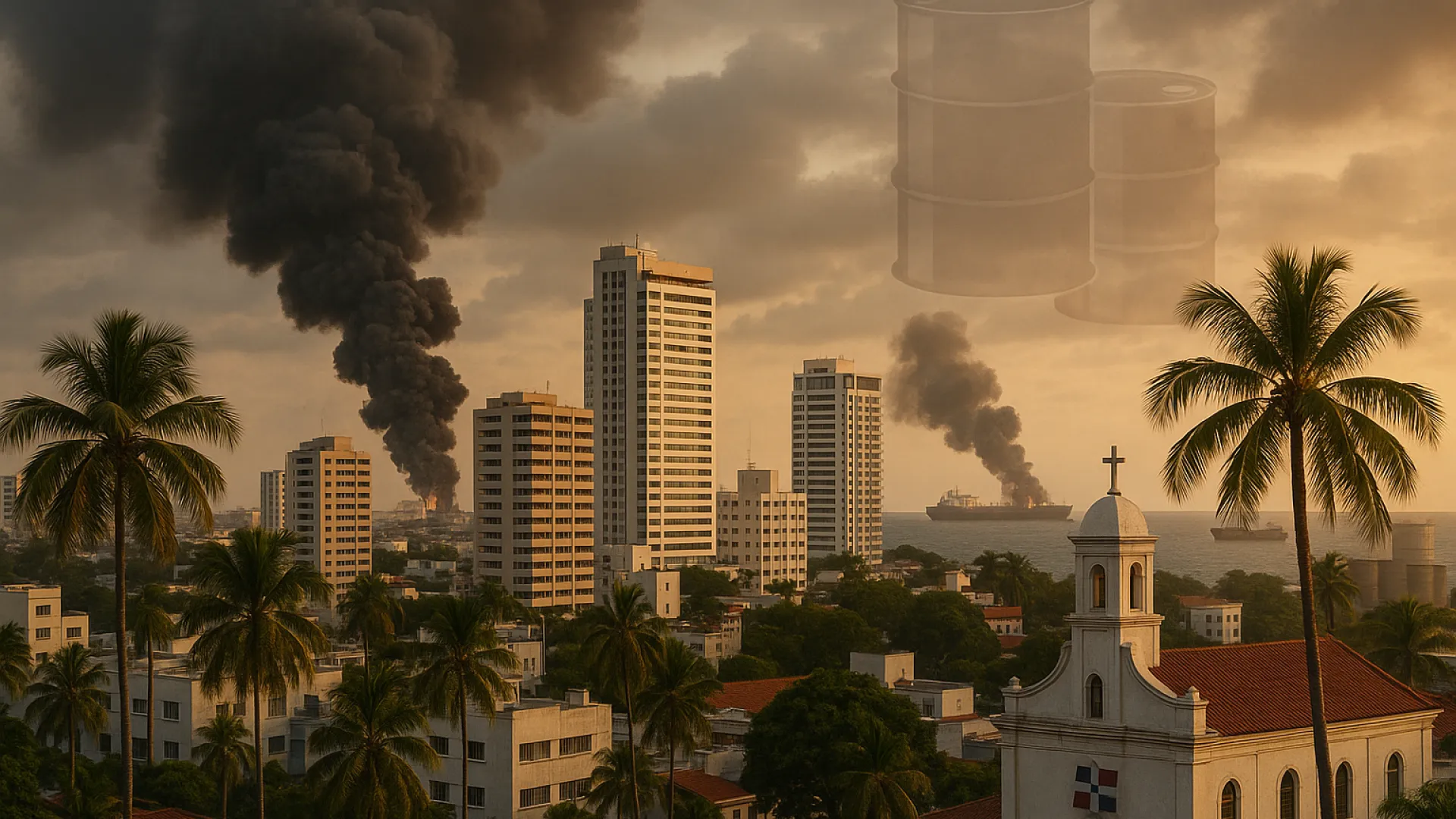
For economies that are heavily reliant on imported fuels, like the Dominican Republic, the consequences of rising oil prices are particularly dire. The country is already facing a more expensive oil bill, which is likely to exert inflationary pressure on the economy and pose risks of economic slowdown. The Dominican Republic's energy sector is vulnerable to fluctuations in global oil prices, and any significant increase could translate into higher costs for consumers and businesses alike.
As the conflict unfolds, the Dominican government must prepare for potential economic fallout. This includes assessing the impact on inflation and exploring alternative energy sources to mitigate dependence on imported oil. The situation also highlights the need for strategic planning in energy policy to ensure stability in the face of global disruptions.
In conclusion, the conflict between the U.S., Israel, and Iran is not just a regional issue; it has far-reaching implications that extend to global oil markets and economies like the Dominican Republic. As the situation develops, it will be crucial for policymakers to remain vigilant and proactive in addressing the challenges posed by this escalating conflict.
Comments
Login to leave a comment on this article.